
Jan Schacher worked with the pupils from September 2022 to June 2023. He sparked the children’s interest in sound by exploring the school and its surroundings, walking through the woods and streets of Bümpliz as well as the school yard and playgrounds while listening, making sounds and recording themselves in their environment. Once engaged in the invisible sphere of the school the children were then initiated into easy, open access sound editing software to edit and design a track from the recordings, telling their own story about the school. This sonic exploration was further developed through text scores and rhythmic drawings, that invited the children into improvisations, to add a physical performance to the field recording work done earlier.
Premise
listening and sounding can serve
as a method for world-making
How to engage youngsters who have never been exposed to sound arts, experimental music approaches or a conscious connection with sound to their world, proves to be the core challenge of this work. Through a step-by-step exploration of five different phases of listening encounter, across an entire year, with recurring workshop-like approaches and concrete activities, the participants are exposed, guided, stimulated, and encouraged to listen and produce sound in the least judgemental manner possible.
Shared Listenings
Exploring aurality, locality, and the sense of community through listening and sounding
The five phases from September 2022 to June 2023
Expose
September 2022
—» sensibilisation: listening to their immediate environment
—» articulation: articulating what kind of sounds are heard
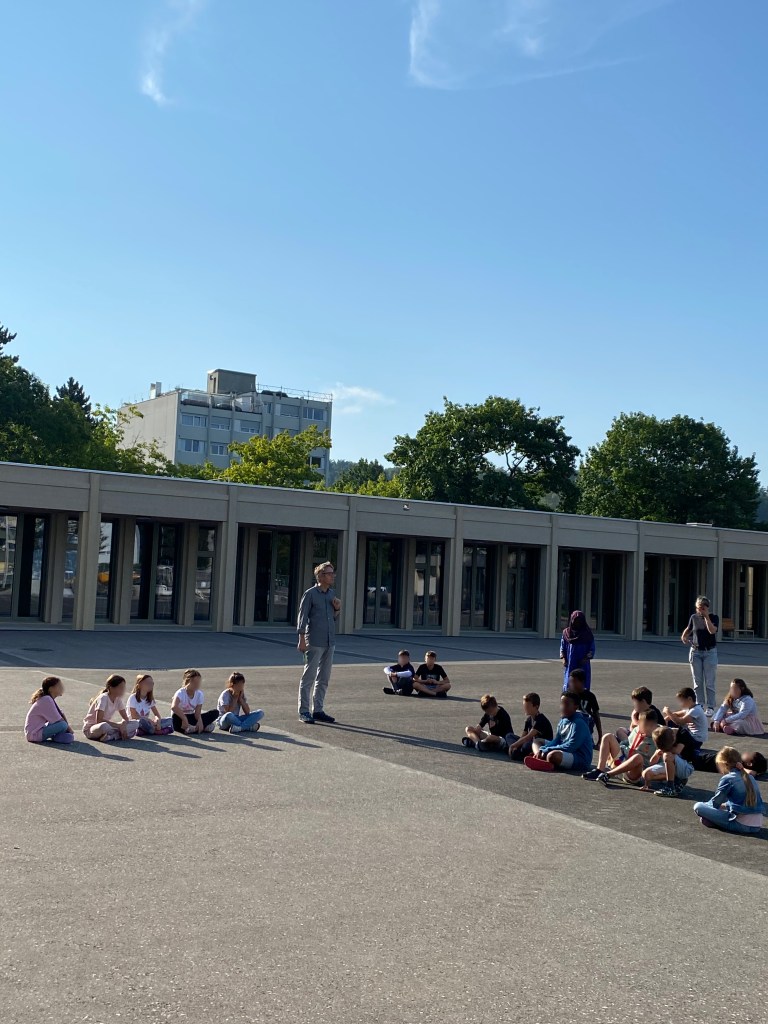
As an exercise in sensibilisation by listening to their immediate environment, they spent 5-10 minutes paying attention in silence to the sounds of their immediate environment.
Next, they had to try articulating what kind of sound they heard, something which is not a given, by any means, even in adults. In the case of the multicultural mix prevalent in this socially diverse environment, language became an underlying question, not because it would be actively preventing communication, but because the level of comfort was widely different
Explore
October 2022
—» listening as the focus of a structured activity
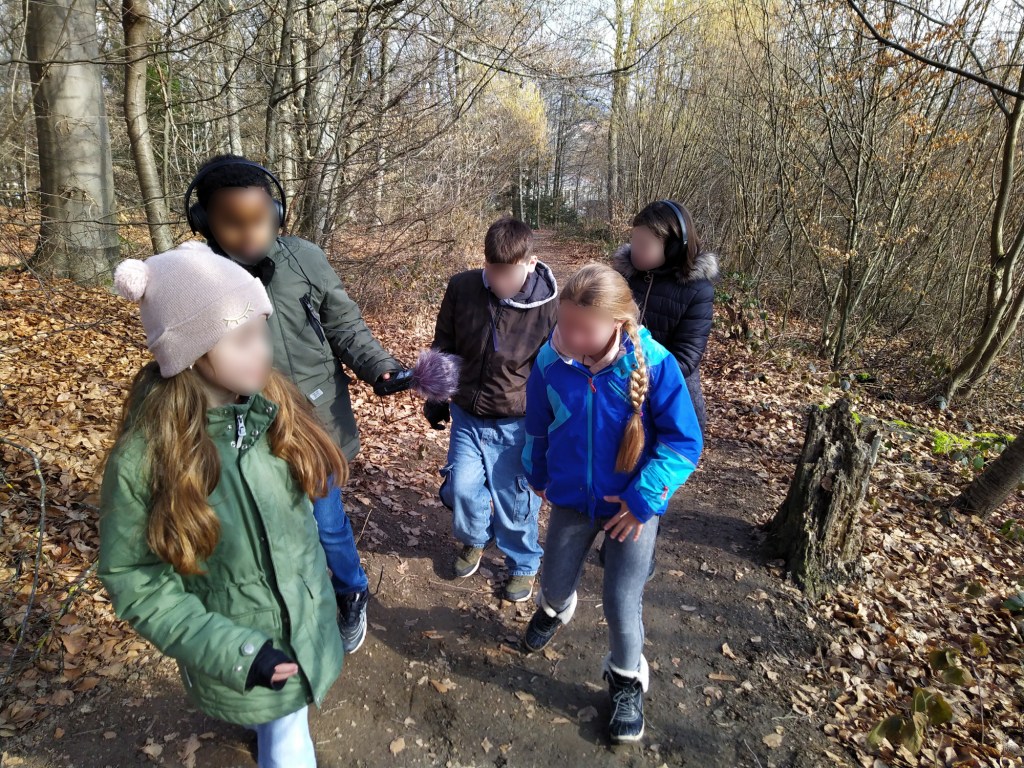
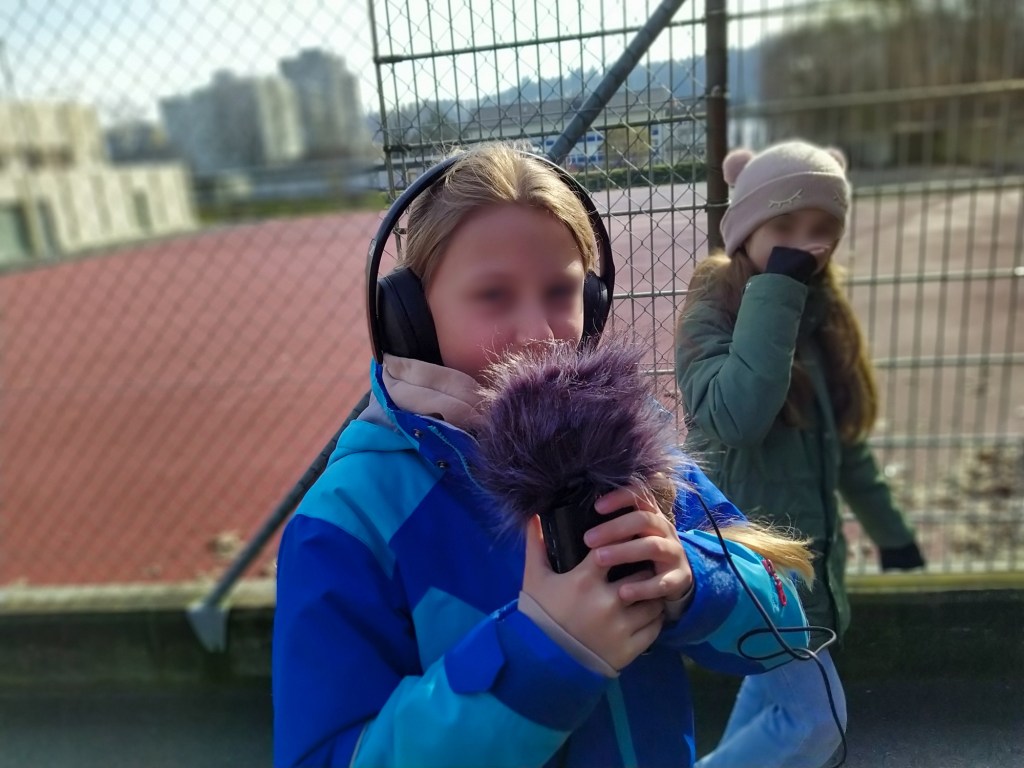
Each group carried three recording devices with headphones, which were shared in turn. Then each group went on a walk around the school’s neighbourhood. Beginning either with an adjacent small forest, then walking down a larger suburban road along a tramline, and a tram stop before returning to the school, or the other way around, a variety of sonic environments were encountered and recorded.
Assemble
February 2023
—» sonic story-telling
—» social situations rather than listening experiences
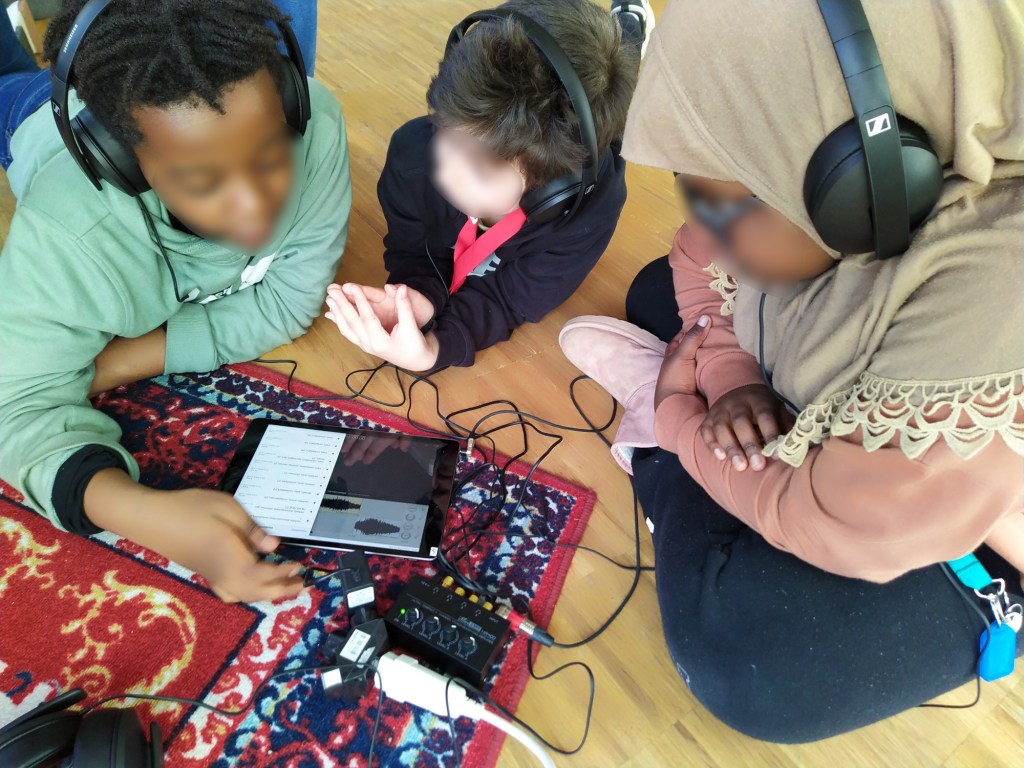
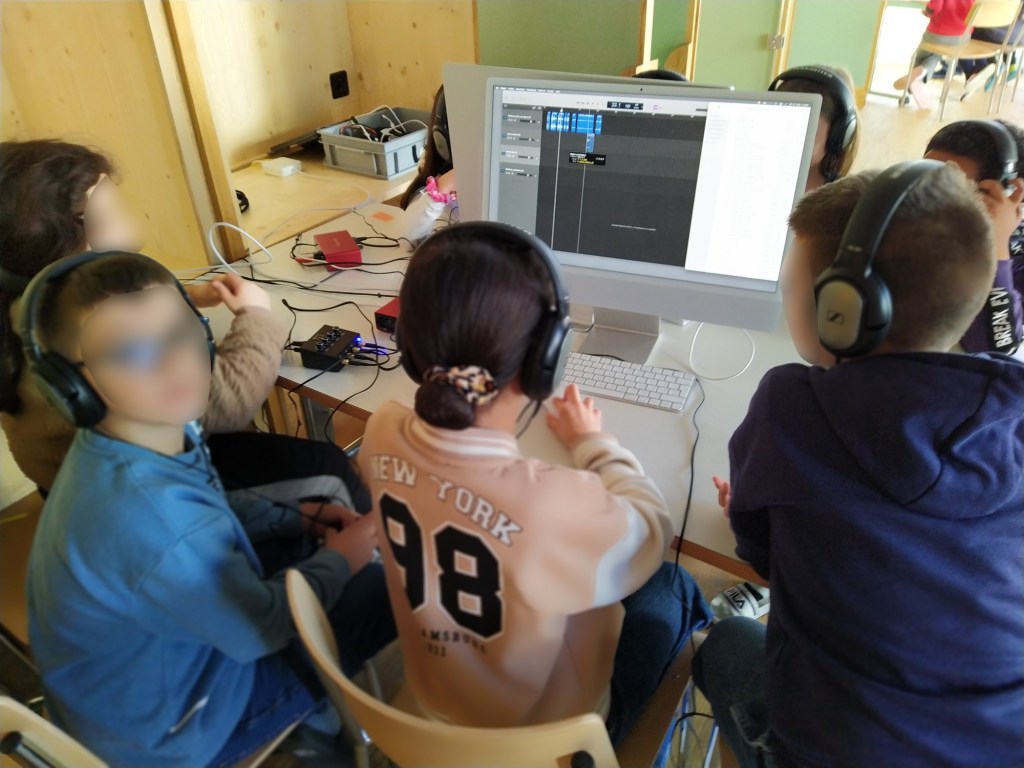
A metaphor used to instruct them was to ‘make a radio piece/podcast,
and construct a story told through sound-fragments, telling about the
sonic characteristics of the neighbourhood’
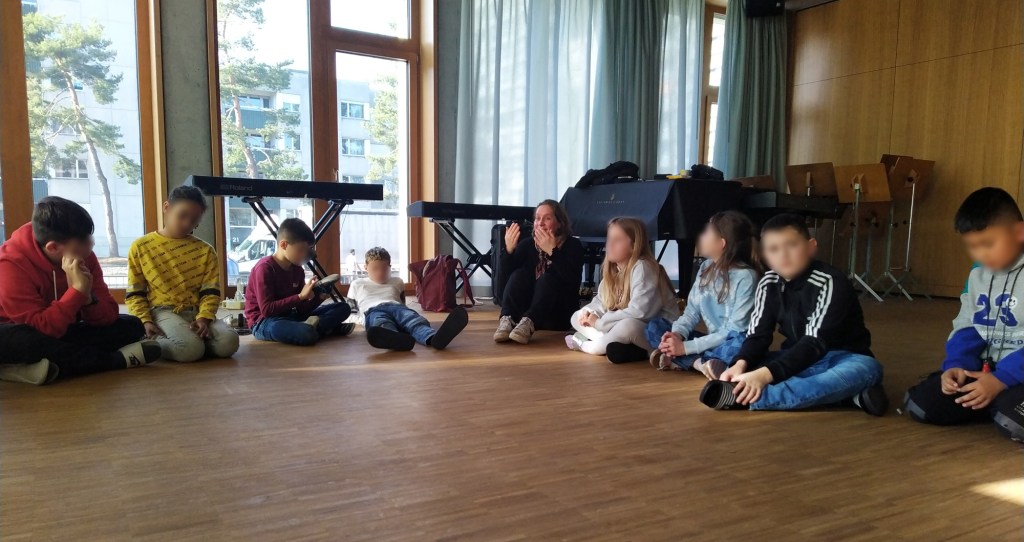
The task of going out and recording the environment resulted in becoming more of a documentation of their joint excursion, of how they were sharing the discovery of the recording device and listening through headphones, rather than the sound events of their environment.
When asked to tell their story, they managed to fictionalise the fragments into imaginary events, sometimes obviously pulled from modes of storytelling in popular entertainment such as crime series.
Activate
May 2023
—» rules, and cross modal expression
—» activate sound/movement with limited means
—» performance-art to laughter
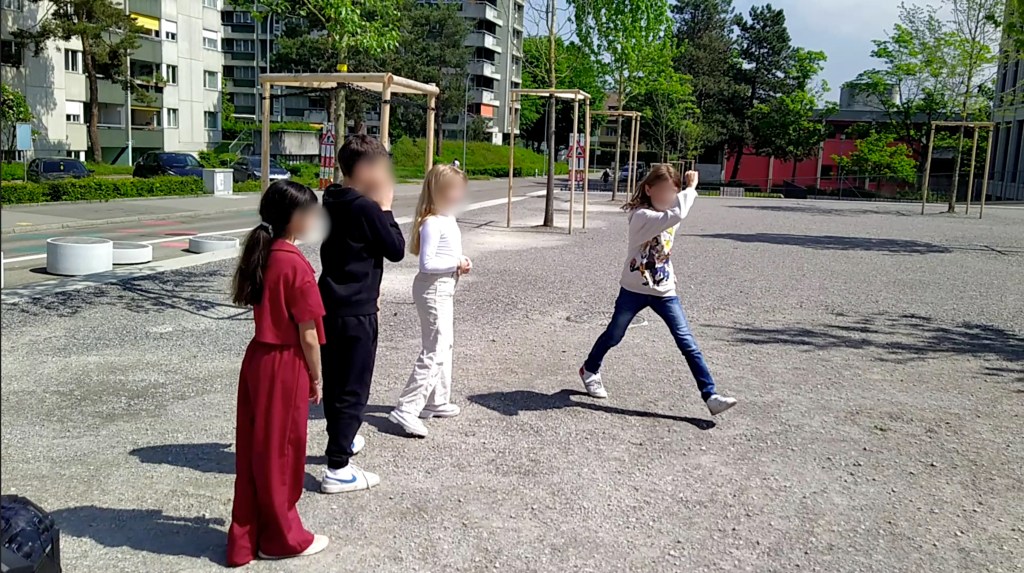
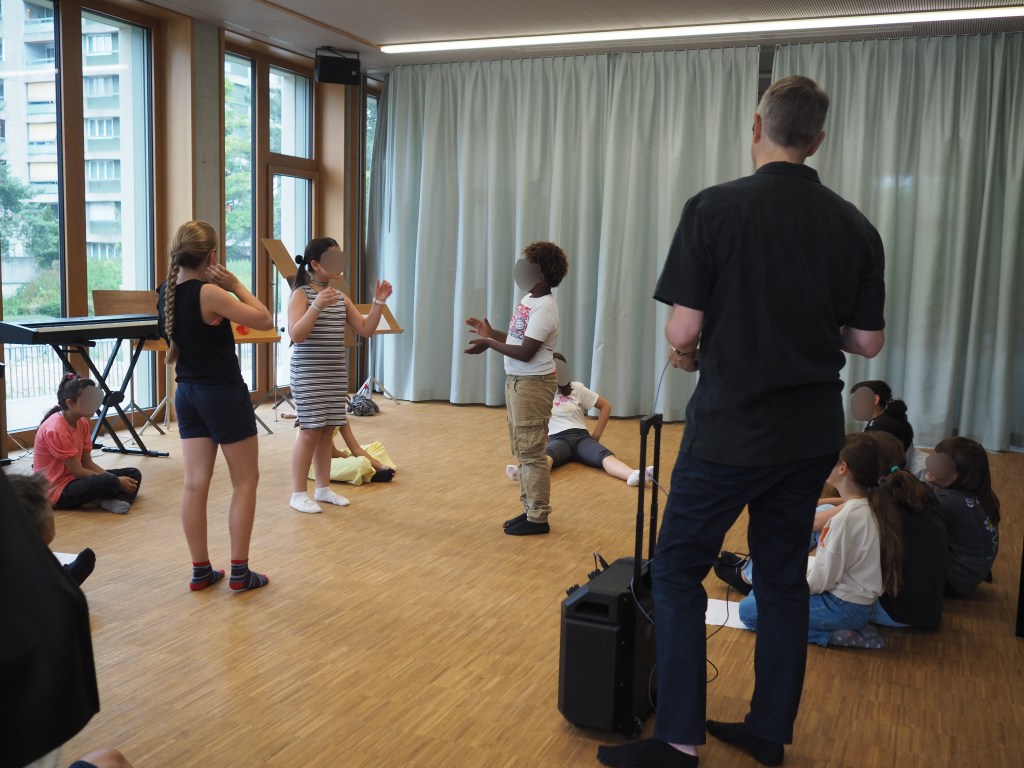
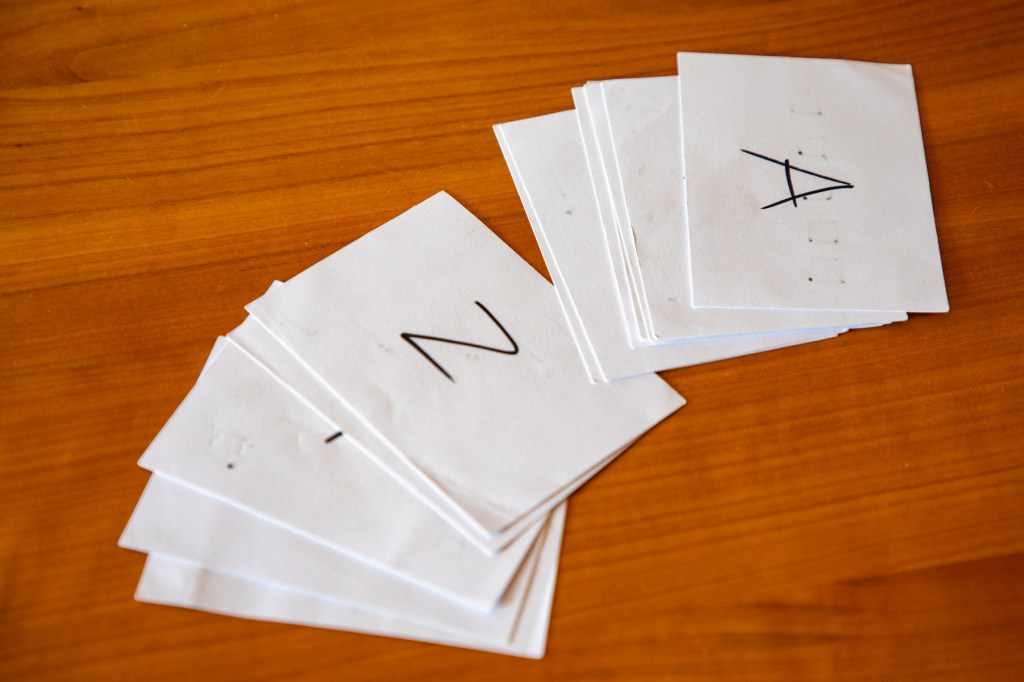
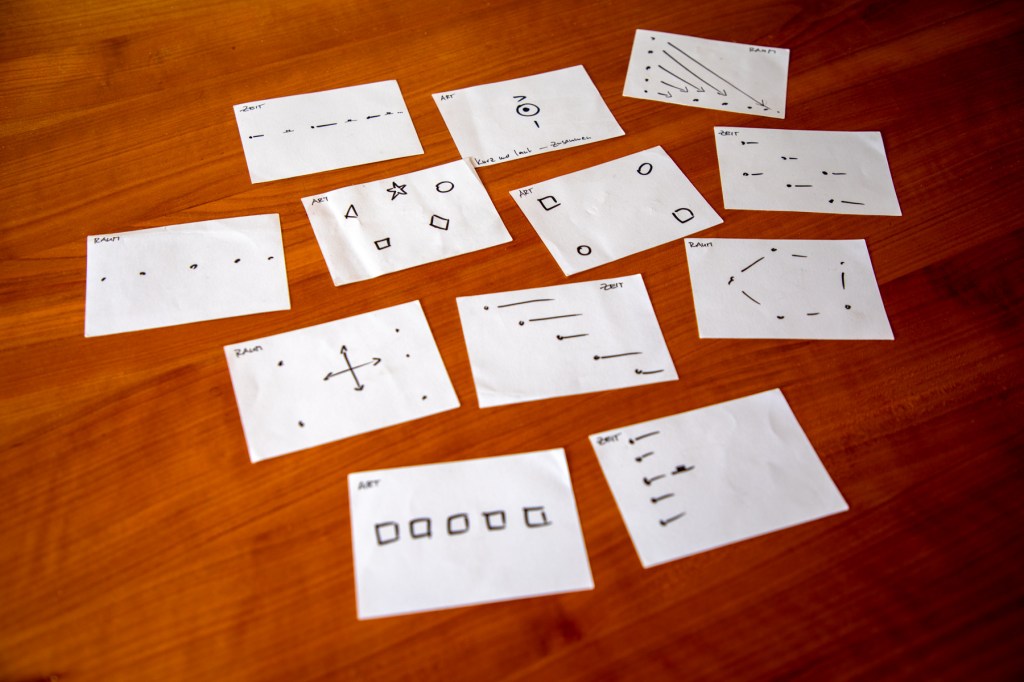
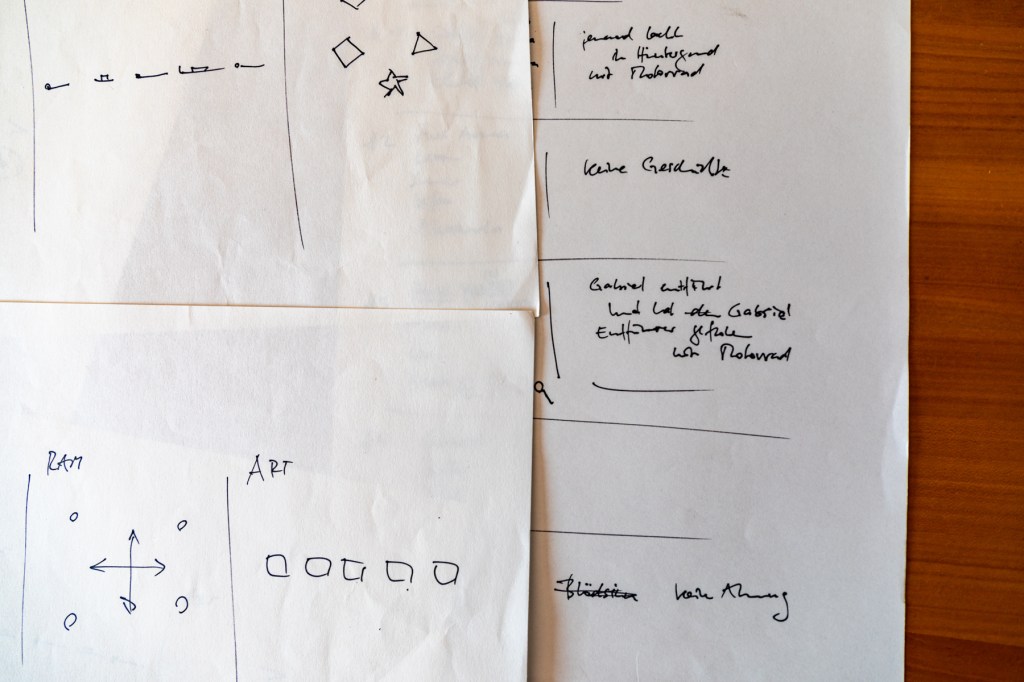
As a simple, yet rich combination of sonic and movement possibilities, a card game was introduced.
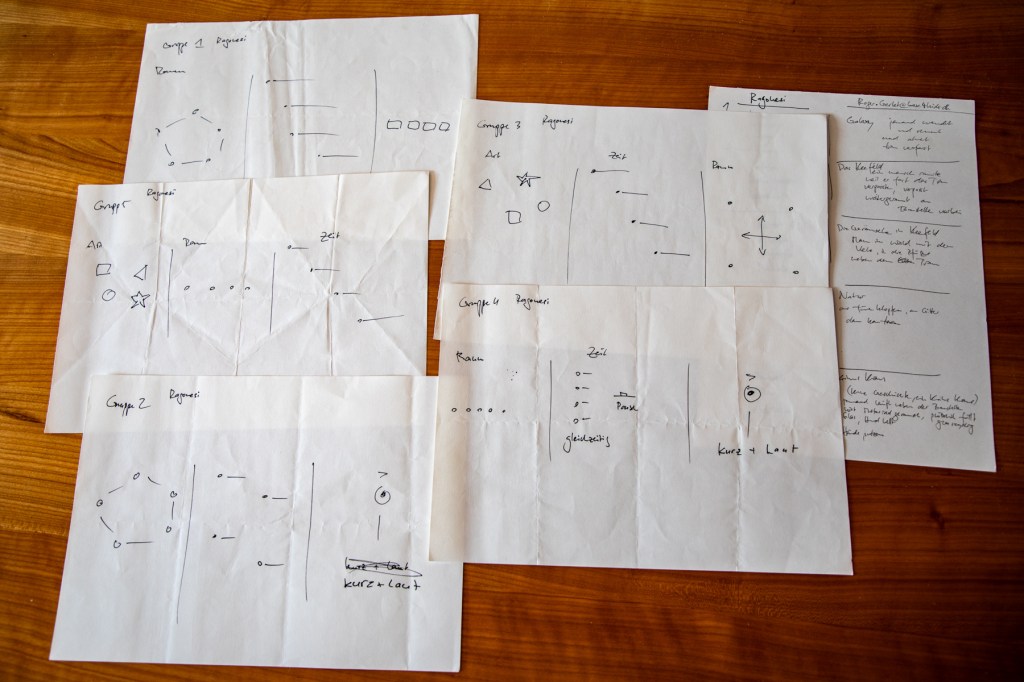
The task was to perform a sound and a movement sequence in their group. Without any instruments at hand, the sounds were limited to voice and body sounds, such a humming, speaking words, clapping stamping the feet etc.
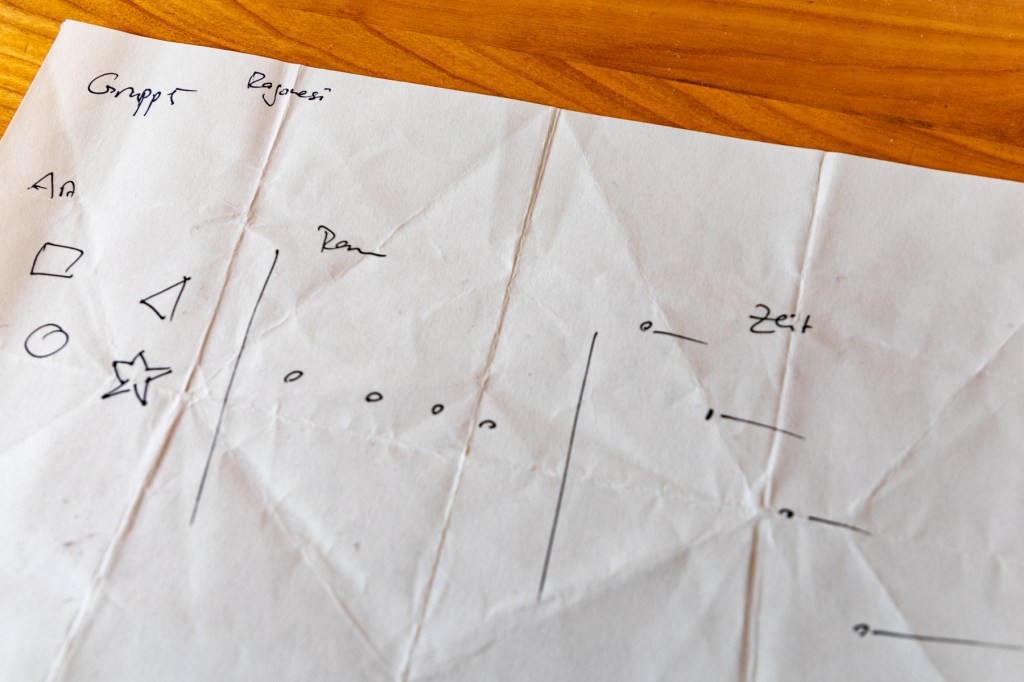
The movements were carried out standing in specific distributions in space, according to the cards.
As challenging as these mini-performances were to practice and learn, and as strange it must have been for the pupils to learn and memorise these unusual performance-art actions, the outcomes led to much laughter, bluster, fluster, and enjoyment.

Show & Share
June 2023
—» public showing, peer and family exposure in unusual modes
The mini-performance and the corresponding pieces were practiced with each class as their audience. At the school party, this situation changed: parents, other pupils, and all four classes were present during the party, making for a lively, loud and exciting moment on that sunny afternoon.
In a kind of performance marathon, within 90 minutes, all 20 groups performed their small plays and played their sound piece, to the general applause of parents, classmates, and teachers.
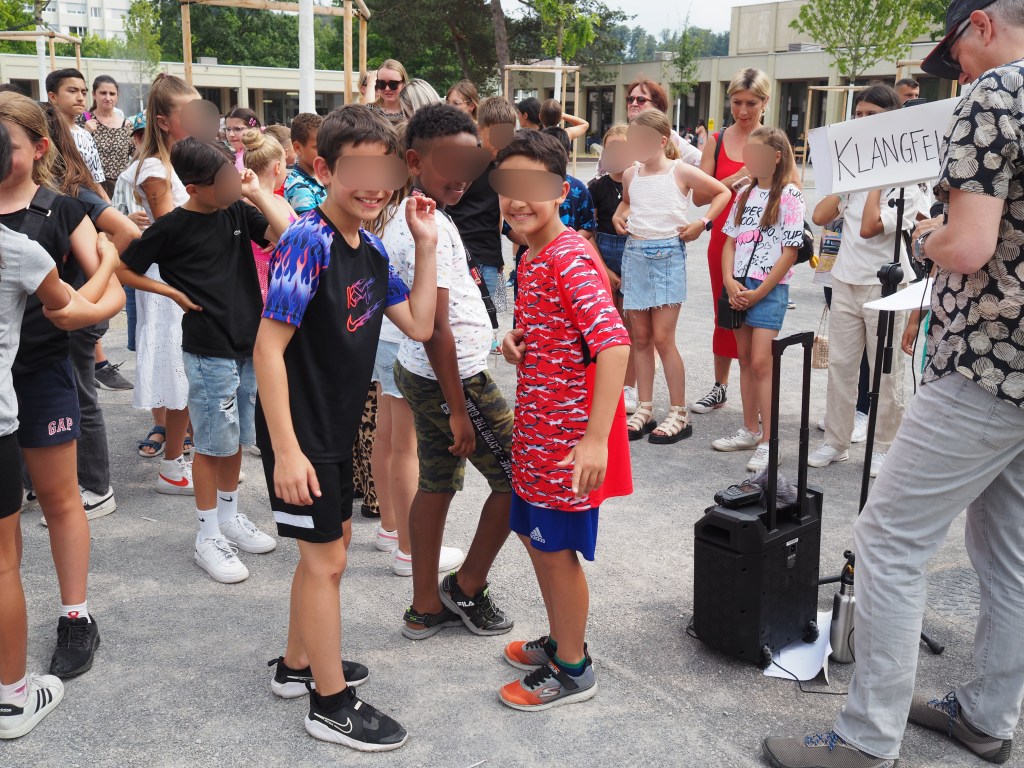
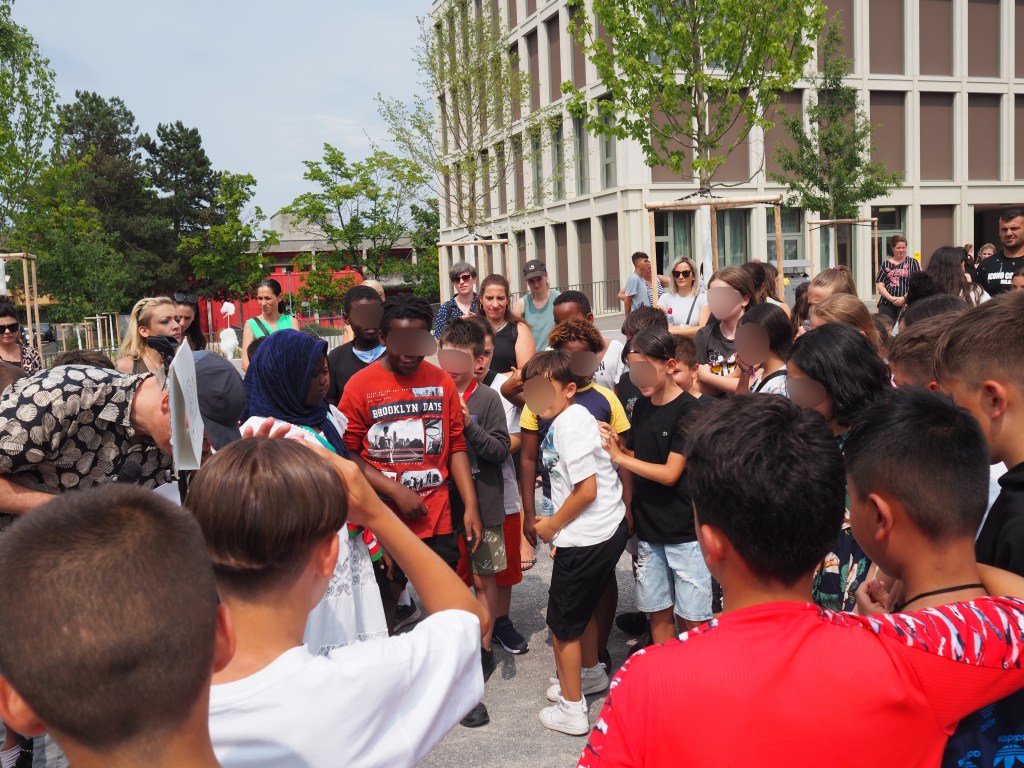
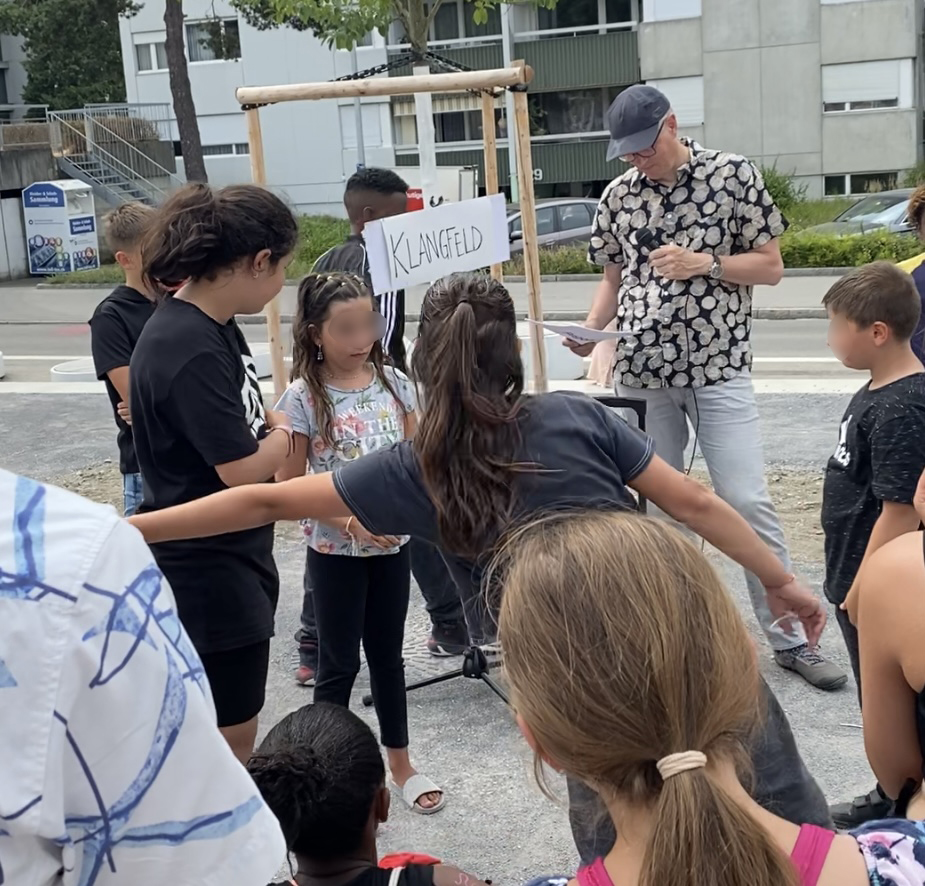
Traces of the card game and the final performance scores.
Pieces
Play the Auditory Kleefeld:
Listening and Play, Exploration of the Lived Environment
Klangfeld Kleefeld 2022/2023: Twenty 1-minute pupil-created sound pieces
edited by jasch on 29/05/2025
As a documentation of part of the outcome, the short narrative pieces assembled by the pupils is provided here as a combined, long chain of small audio snippets.
Total duration of the audio-file is 21:09
NB: The combined file is best listened to on headphones, with the volume turned down.
The following lists the 3rd & 4th-grade classes named after the teachers, the groups, and their contributions’ starting time within the audio-file:
- Boesch: group 1 0:00.0 , group 2 1:05.7, group 3 1:23.5, group 4 2:29.9, group 5 3:10.5
- Herren: group 1 4:54.9, group 2 6:10.3 , group 3 6:55.9 , group 4 7:57.8 , group 5 8:30.7
- Lindenmann: group 1 08:59.0, group 2 11:10.9 , group 3 12:07.2, group 4 13:32.8, group 5 14:45.3
- Ragonesi: group 1 16:14.5 , group 2 17:44.2 , group 3 18:44.6 , group 4 19:30.0 , group 5 20:06.8
Weaving a Sonic Kleefeld:
Young People, Places & Situations
by jasch 05/2025
This piece is a montage or soundscape composition using the same raw-materials than the pupils had at their disposition during the Assemble phase and a few additional field-recordings made in Bern-Bümplitz around the Kleefeld school in spring 2023. Overall, this piece is more atmospheric and less hectic than the activities with the kids, representing a personal listening focus and my perceptions of the environment at and around the Kleefeld school in Bern-Bümplitz.
Reflection
The following text contains a combination of process descriptions and reflections about my contribution to the overall project.
Jan Schacher ‘jasch’ is an artist-researcher, electronic musician, and media artist who, among other things, studies how a musician’s body functions as a resonator and focal site for sound and presence. By listening to the environment and transforming sounds into experiences, his musical approach extends beyond conventional music formats to include participatory situations in urban and natural settings. He is currently developing the concept of sonic commons in the project “How to live together in sound?”, has worked on urban sonic interventions in “sononzones”, and developed augmented sonic landscapes in “davossoundscape” and “the left-hand path”. Now based in Helsinki, Finland, in the past three decades he has carried out cross-cultural music-dance performance projects in Cuba, India, Japan, and performed and presented installations in electronic music and media art venues across the world.
 KleefeldKlangfeld